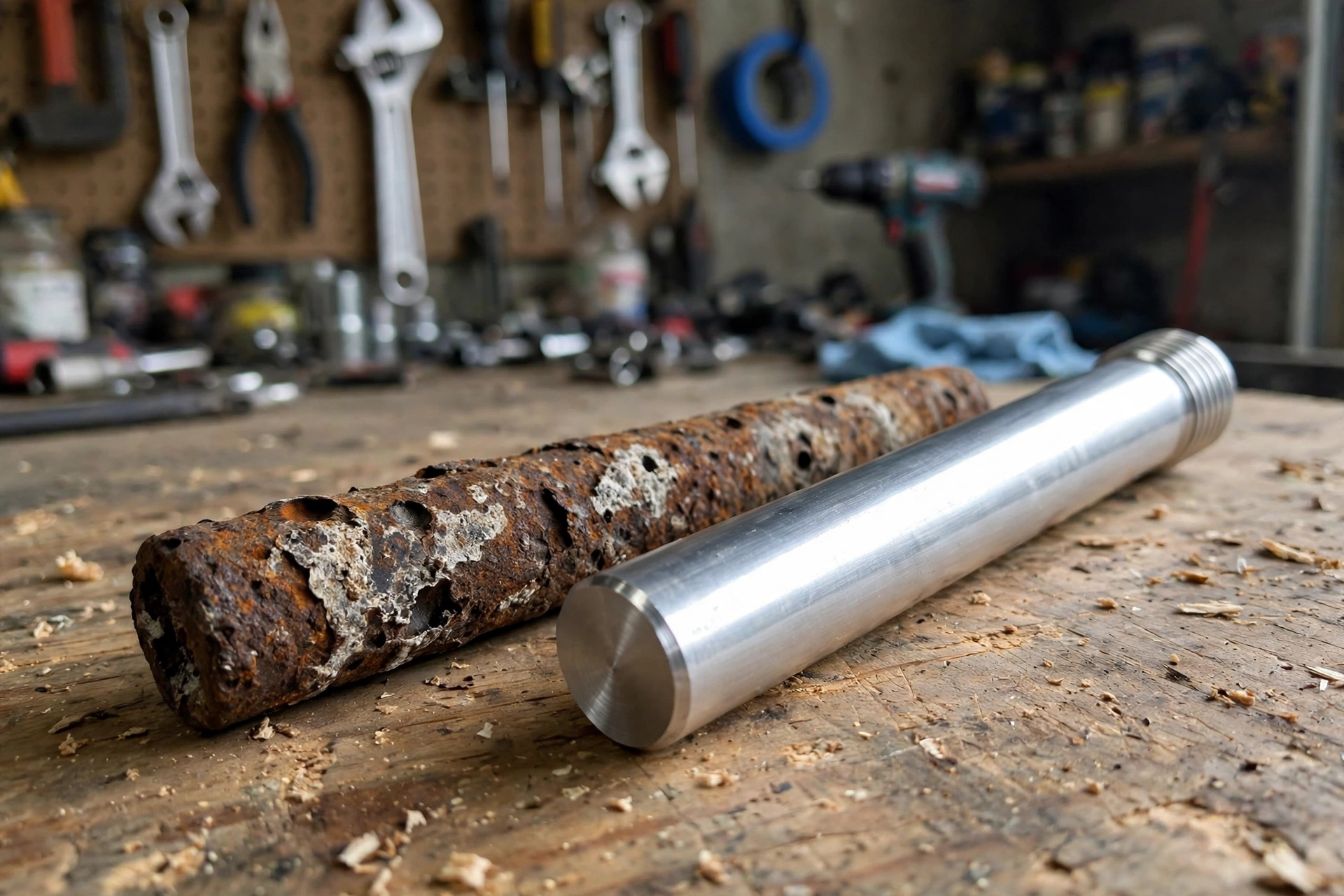
Anode Rods and Arizona Hard Water
The anode rod is a metal rod inside your water heater that corrodes in place of the tank, and in Tempe's 15 to…
Learn moreWalk into almost any Tempe garage and you will find the water heater tucked in a corner, humming away through summer heat that tops 115 degrees. Garage installation is simply how it is done in the Valley: no basements, mild winters, and concrete floors make the garage the practical home for water heating equipment.
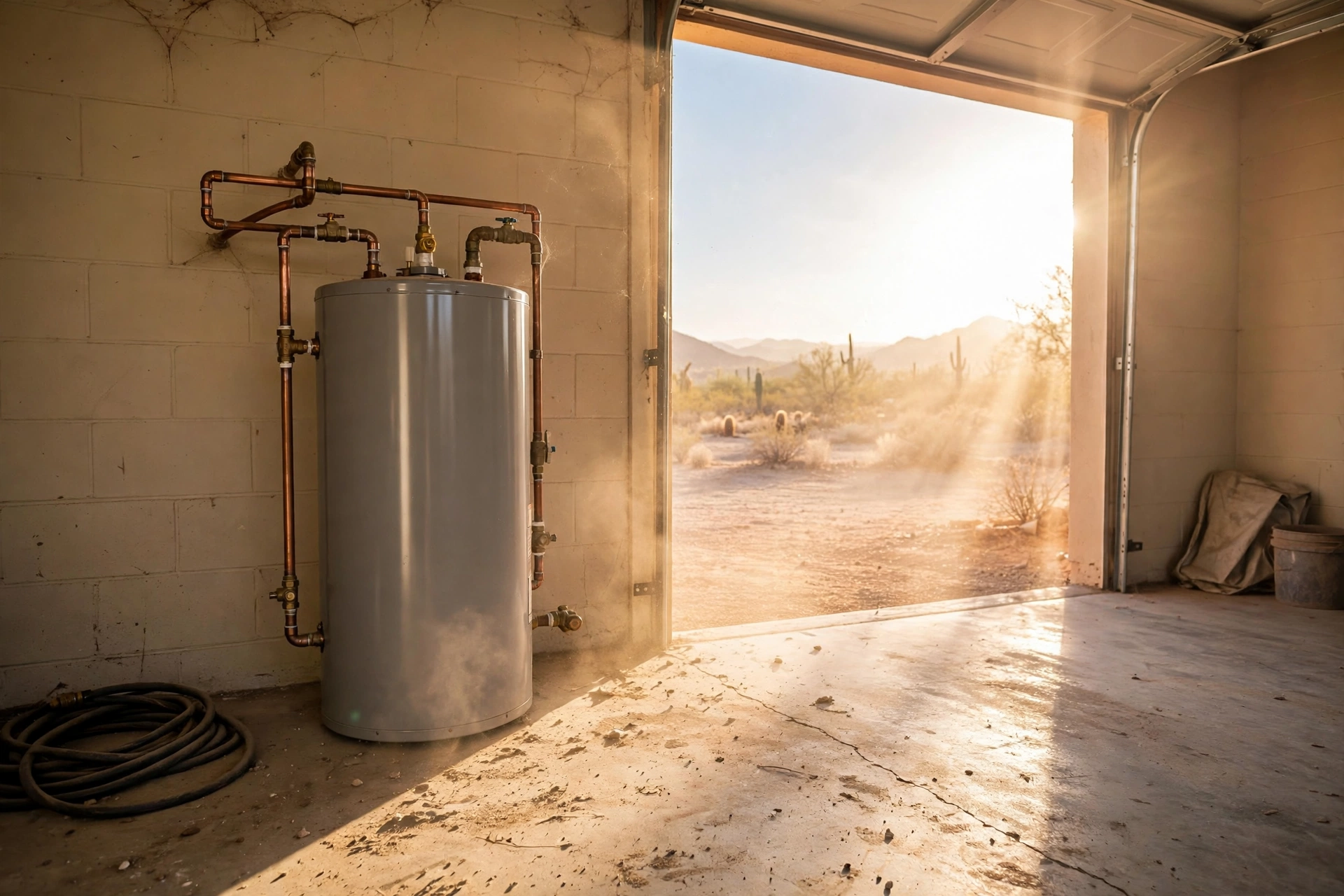
But normal does not mean thoughtless. Extreme heat, dust, hard water, and monsoon winds all interact with a garage installed unit in ways that affect its efficiency, safety, and lifespan. This guide covers what a good garage installation looks like in Arizona and what to watch for in yours.
Valley homes are built on slabs, not basements, so there is no below grade utility room for a water heater. The garage offers concrete floors that tolerate the occasional drip, easy venting through the roof or wall, and enough space for a 40 or 50 gallon tank without intruding on living areas.
Indoor closets are the main alternative, but they complicate venting and leak containment. For most Tempe floor plans, the garage wins on practicality. The tradeoff is exposure to temperature swings, dust, and everything else a garage collects, which is why installation details matter more here than in a climate controlled basement.
Some newer Tempe builds place the water heater in a hallway utility closet instead, but the garage remains the default for most of the Valley's housing stock, from mid century ranch homes near ASU to newer subdivisions on the edges of town. Wherever yours sits, the installation principles are the same.
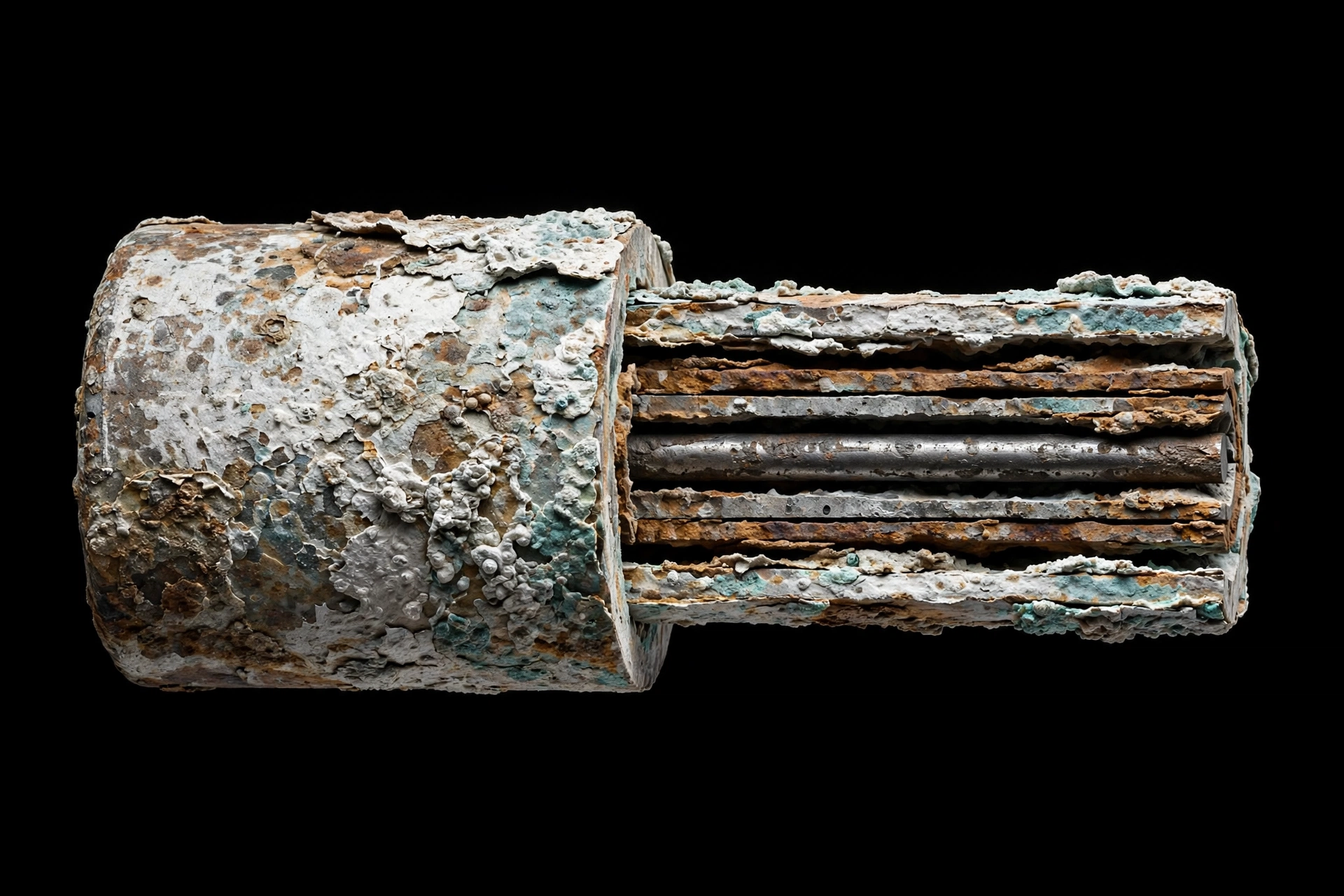
Extreme garage heat is a mixed bag. On the plus side, warm inlet water and warm ambient air mean the burner or elements work less to reach temperature, which slightly trims energy use in summer. Heat also means freeze protection is essentially a non issue in the Valley.
The downsides are real, though. Sustained heat accelerates tank corrosion, degrades rubber seals and plastic components like dip tubes faster, and bakes sediment harder onto the tank bottom. Electronics on modern units also prefer cooler conditions. A garage that hits 115 degrees in July is simply a harsher home than a 70 degree basement, and Tempe units pay for it in lifespan, which is why our guide on how long water heaters last in Arizona puts local tanks at 6 to 10 years.
Good garage placement starts with clearance. Gas units need combustion air and proper distance from walls and stored items, and every unit needs service access on all sides. Cramming the heater behind stacked boxes is common in Tempe garages and makes every future service call harder and slower.
A drain pan under the unit is cheap insurance that too many garages lack, and a quality water heater installation in a Tempe garage always includes one with a proper drain line. When a tank eventually fails, and in Arizona hard water every tank eventually fails, the pan catches the initial release and directs it to a drain instead of across the concrete toward drywall and storage. If your install does not have one, adding it during the next service is a wise upgrade.
Related: water heater installation
Gas water heaters must vent combustion gases safely outside, and garage installs usually vent through the roof. The vent needs proper slope, secure joints, and a cap that resists wind. During monsoon season, powerful gusts can stress vent caps and even affect draft, which is one reason pilot problems spike in late summer.
Never store gasoline, paint, or solvents near a gas water heater. Garages tend to accumulate exactly these items, and the burner flame plus flammable vapors is a combination to avoid. Keep the area around the unit clear and well ventilated as a basic safety habit.
Both systems work in garages, with different space tradeoffs. A tank occupies a few square feet of floor space permanently, which matters in a two car garage that is already tight. A tankless unit mounts on the wall and frees that floor space, a real advantage for homeowners who use the garage as a workshop.
Tankless installs need more planning around venting and gas supply, while tank swaps are usually straightforward. If you are weighing the two systems for a garage install, our tank versus tankless comparison for Arizona covers lifespan, hard water handling, and cost tradeoffs in local conditions. Venting also deserves thought, since monsoon winds can stress vent caps, as our monsoon season water heater tips for Tempe explain.
Related: tank versus tankless comparison for Arizona, monsoon season water heater tips for Tempe
Treat your garage water heater as equipment living in a harsh environment, because it is. Annual flushing matters even more when heat bakes sediment faster. Keep the area clear for airflow and service access. Check the vent cap after major wind events, and glance at the drain pan and discharge piping now and then for early signs of trouble.
Small habits compound. A unit that gets airflow, maintenance, and prompt attention to little issues will outlast one that is ignored behind the storage boxes, even though both bake in the same 115 degree garage all summer.
Consider a water softener if you want to attack the root cause rather than just the symptoms. Softened water slows sediment buildup and corrosion alike, which makes every other maintenance habit more effective. It is the single upgrade that helps the water heater, the dishwasher, and the plumbing fixtures all at once.
Read the guide, then describe your water heater problem and we will help arrange the next step.
Yes, it is standard in Tempe. The heat slightly helps efficiency but accelerates corrosion and component wear, so garage units need regular maintenance and proper installation details like venting and drain pans.
It contributes. Sustained 115 degree heat speeds corrosion, degrades seals and dip tubes, and bakes sediment harder. Combined with hard water, it is part of why Arizona tanks last 6 to 10 years.
Absolutely. A pan with a drain line contains the initial release when a tank fails, protecting drywall and stored belongings. If yours lacks one, add it at the next service visit.
What Arizona heat means for the water heater in your garage.
Call (480) 806-1663The anode rod is a metal rod inside your water heater that corrodes in place of the tank, and in Tempe's 15 to…
Learn more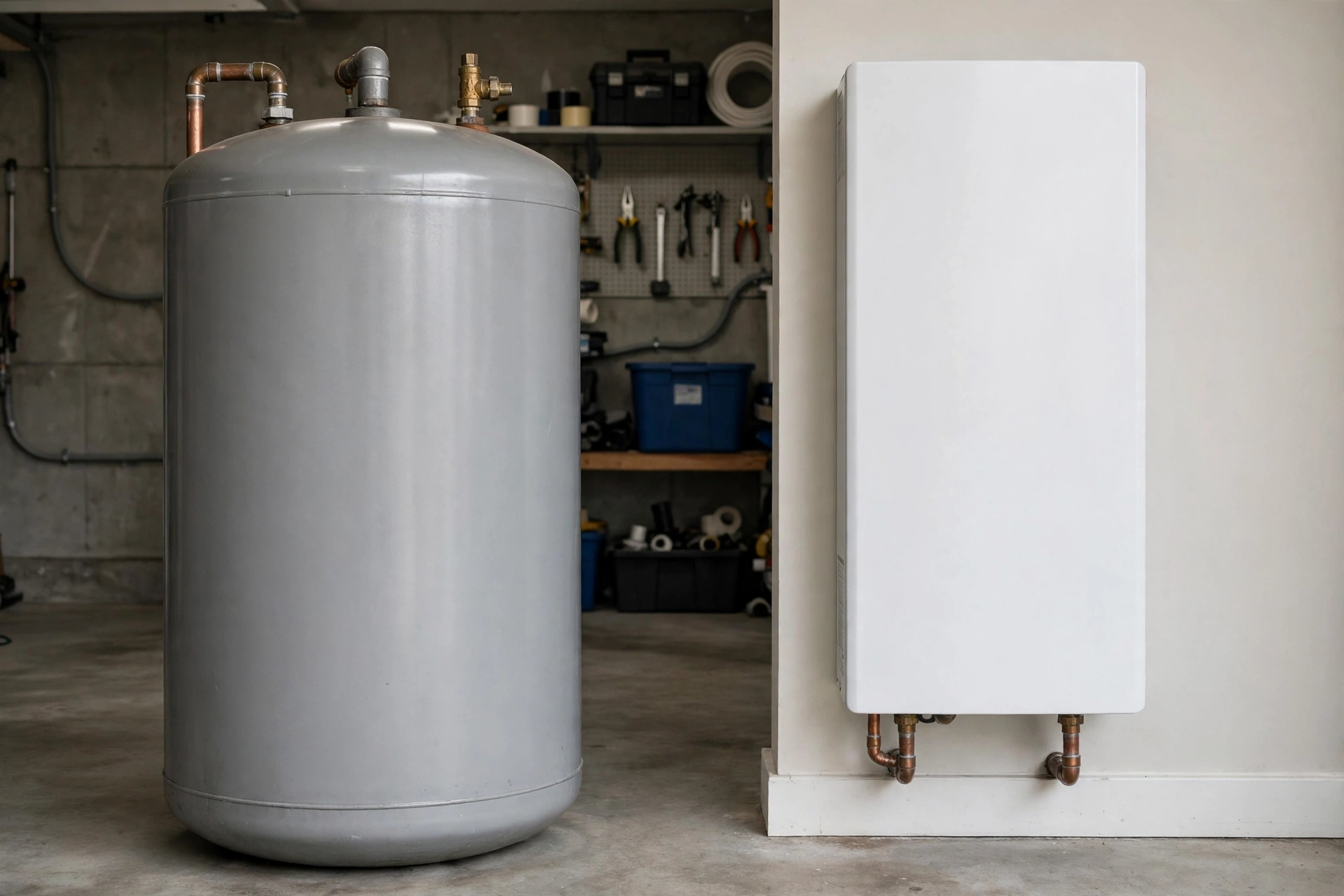
In Arizona, a traditional tank water heater lasts 6 to 10 years and costs less upfront, while a tankless unit …
Learn more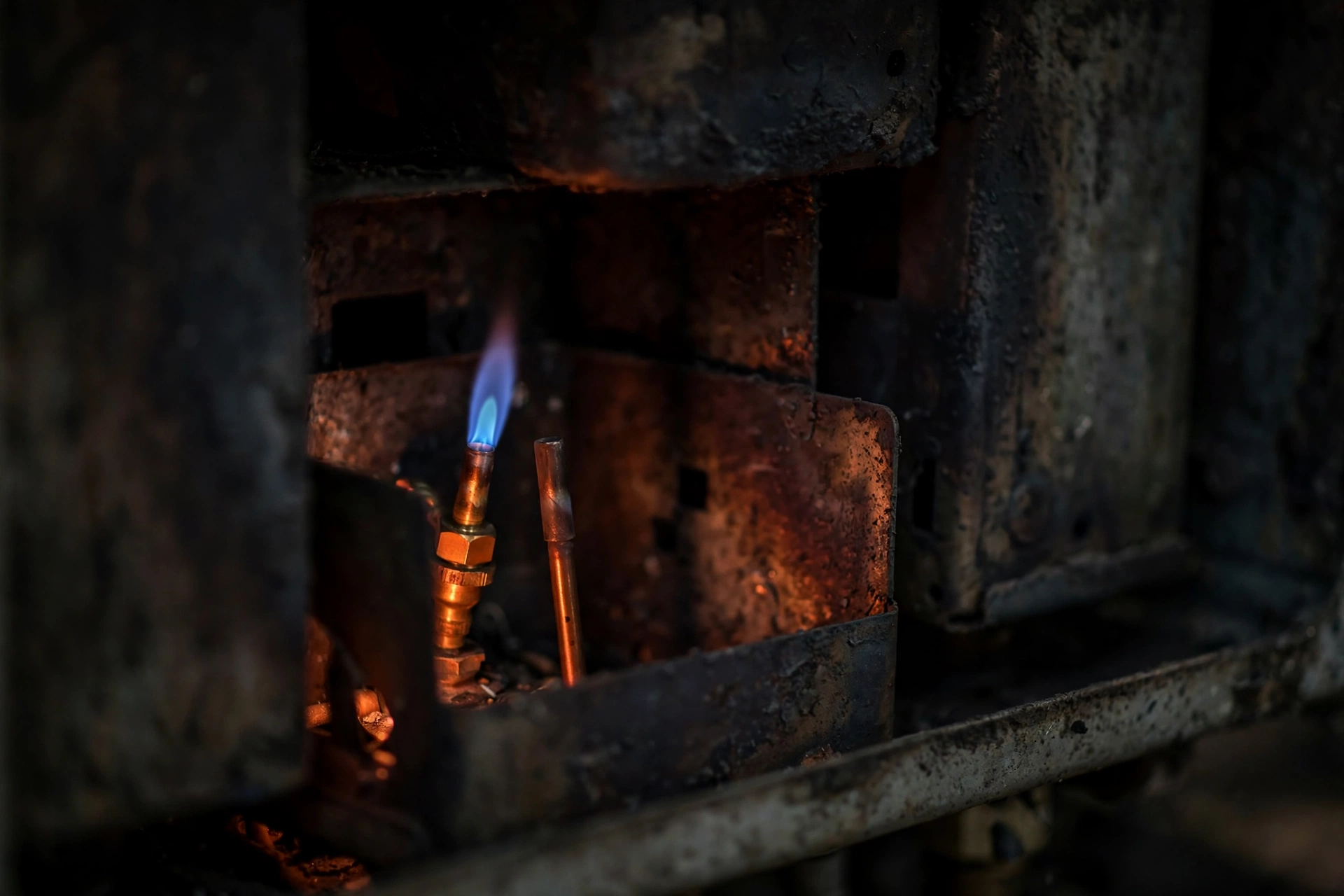
A pilot light that will not stay lit on a Tempe water heater is most often caused by a failed thermocouple, a …
Learn more