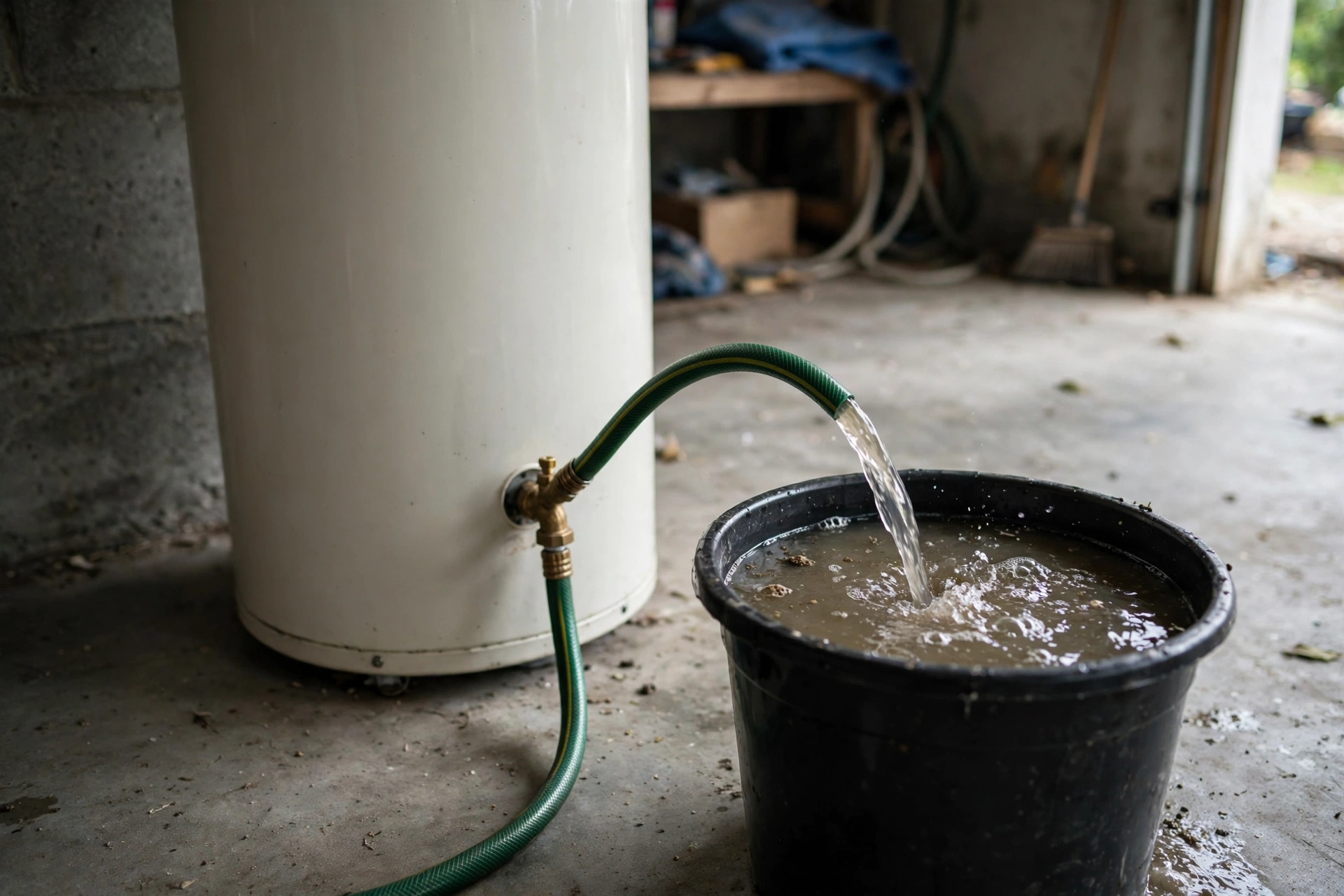
Flushing a Water Heater in Tempe Hard Water
Because Tempe water measures 15 to 25 grains per gallon, sediment builds up far faster here than in most of th…
Learn moreInside every tank water heater is a humble metal rod doing a heroic job. The anode rod sacrifices itself to corrosion so the steel tank does not have to, and in Arizona's extremely hard water, it works overtime. Most Tempe homeowners have never heard of it, which is a shame, because it is the single cheapest way to extend a tank's life.
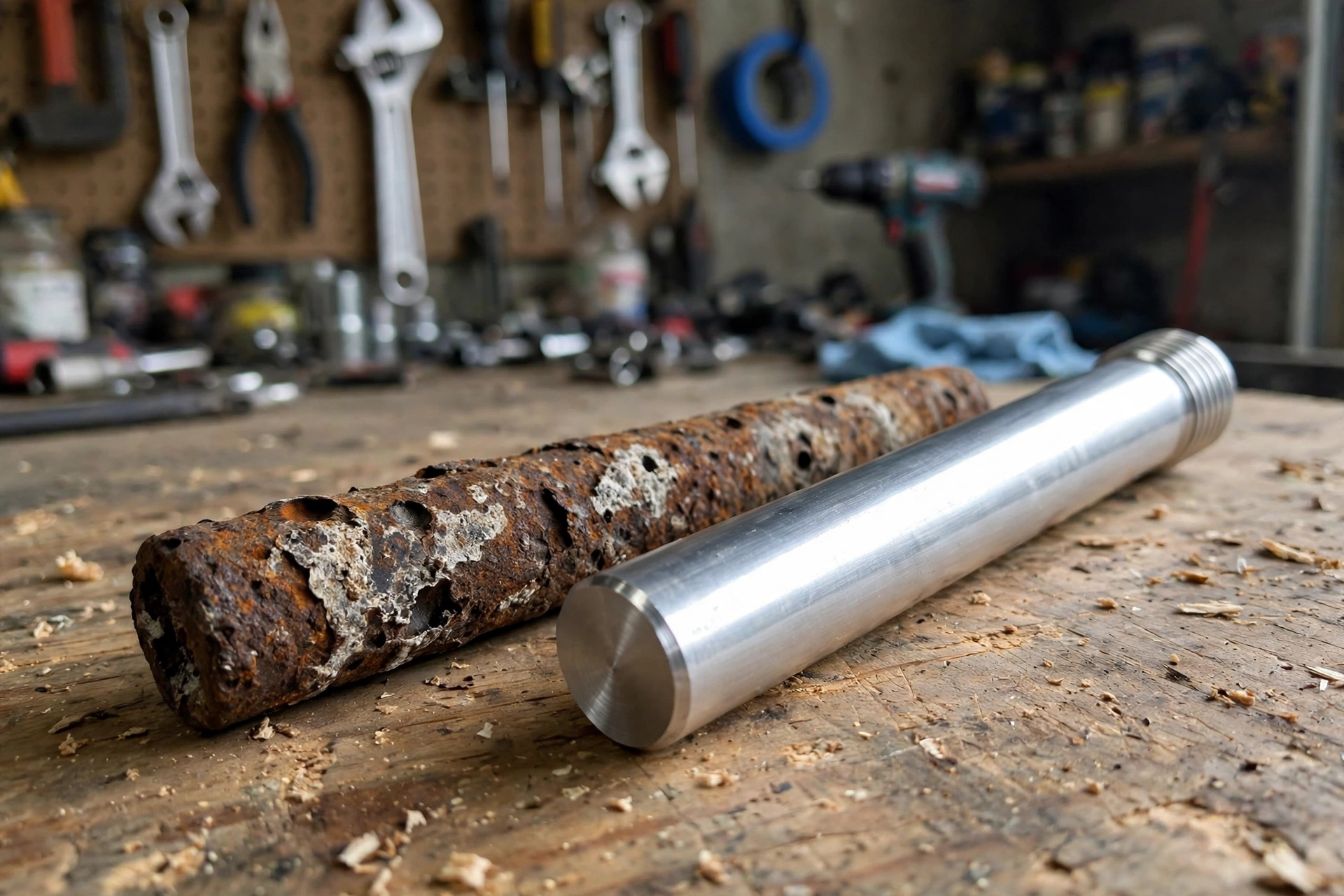
This guide explains what the anode rod does, why Tempe water eats it faster, how to know when it needs replacement, and how it fits into the rest of your water heater maintenance. If your tank is middle aged and has never had its rod checked, this is the article that might save it.
Steel tanks rust when exposed to water and oxygen. The glass lining inside the tank slows this down, but the lining always has microscopic flaws, and heating cycles open up tiny cracks over time. The anode rod, made of magnesium or aluminum, is more reactive than steel, so corrosive forces attack the rod first.
Think of it as a lightning rod for corrosion. As long as healthy rod metal remains, the tank wall is largely protected. Once the rod is fully consumed, corrosion turns its full attention to the tank itself, and the countdown to a leak begins. That transition is silent, which is why scheduled checks matter more than waiting for symptoms.
Rods come in a few varieties, including magnesium, aluminum, and powered models, but the job is the same: corrode first so the tank does not. Your technician can recommend the right type for Tempe water when replacement time comes.

Corrosion is an electrochemical process, and dissolved minerals make water more conductive, which speeds the whole thing up. Tempe water at 15 to 25 grains per gallon is extremely hard, so the anode rod dissolves noticeably faster here than it would in soft water regions. A rod rated for five years elsewhere may last two to three in the Valley. That is one more reason flushing a water heater in Tempe hard water each year matters: it clears the mineral sediment that keeps the chemistry aggressive.
Heat adds to the effect. Water heaters in 115 degree garages run with warmer incoming water and more thermal cycling, both of which keep the chemistry active. Between the mineral load and the heat, Tempe tanks consume their protection faster than almost anywhere else in the country.
Every two to three years is the right inspection interval for Tempe. A technician pulls the rod from the top of the tank and checks how much sacrificial metal remains. A rod that is mostly intact goes back in. One that is down to a thin wire or coated in calcium gets replaced.
Pair rod checks with your annual water heater maintenance and flushing schedule and you will never have to think about it separately. Many homeowners simply ask for a rod inspection at every second or third flush visit. Our guide on how long water heaters last in Arizona explains how rod maintenance fits into the bigger lifespan picture for both tank and tankless systems.
Related: how long water heaters last in Arizona, water heater maintenance and flushing
Because the rod is hidden inside the tank, its failure announces itself indirectly. Rusty or metallic smelling hot water can mean the tank wall is now corroding since the rod is gone. A rotten egg smell from hot taps points to bacteria reacting with a depleted or aluminum rod, a related but distinct issue a professional can sort out.
Age is the most practical indicator. If your tank is more than three years old and the rod has never been checked, assume it needs a look. Waiting for rusty water means waiting until the tank itself is already under attack, which is exactly the outcome the rod exists to prevent.
A technician can also assess the rod indirectly during a flush by checking the water coming out and inspecting the rod port. If the rod has swollen with calcium or broken off inside the tank, replacement takes a bit more work, but it is still far cheaper than a new water heater.
Replacing an anode rod is a modest maintenance job and one of the best values in home care. On a mid life tank with a healthy shell, a fresh rod buys real years. It is the definition of spending a little now to avoid spending a lot later.
The math changes on an old tank. If the unit is past eight years and showing other symptoms like rumbling, slow recovery, or dampness at the base, a new rod will not reverse existing damage. In that case, read the signs it is time to replace your water heater and put the money toward a planned replacement instead of extending a tank that is already failing.
The anode rod works best as part of a simple routine: flush annually, check the rod every two to three years, keep the thermostat at 120 degrees, and test the temperature and pressure relief valve yearly. None of these tasks is difficult or expensive, and together they are what push a Tempe tank from the low end of the 6 to 10 year range to the top of it.
Ask your technician about the rod at your next service visit. It takes minutes to inspect, and knowing its condition turns your water heater from a mystery box in the garage into a maintained appliance with a predictable future.
Read the guide, then describe your water heater problem and we will help arrange the next step.
It corrodes in place of the steel tank, protecting the tank wall from rust. Once the rod is fully consumed, corrosion attacks the tank itself, which is why replacement matters.
Every two to three years in Tempe, because 15 to 25 grains per gallon hard water consumes rods faster than average. Pair the check with your regular flushing schedule.
On a mid life tank with a sound shell, yes, it buys real years. On a tank past eight years with rust, noise, or leaks, replacement is the smarter investment.
The small part that decides how long your tank survives hard water.
Call (480) 806-1663Because Tempe water measures 15 to 25 grains per gallon, sediment builds up far faster here than in most of th…
Learn more
Losing hot water in Tempe usually traces back to a handful of causes: a pilot light that went out, a failed th…
Learn more
Garage installation is the norm in Tempe, and Arizona's 115 degree summer heat shapes every part of the setup.…
Learn more