Water Heater Repair
Valley Water Heater Pros repairs gas and electric water heaters across Tempe, from failed heating elements to …
Learn moreTankless water heaters changed the math on hot water. Instead of keeping 50 gallons hot around the clock in a Tempe garage, a tankless unit heats water only when a tap opens, delivering a continuous stream for as long as you need it. No recovery time, no cold surprise halfway through the second shower, and no giant tank occupying garage space.
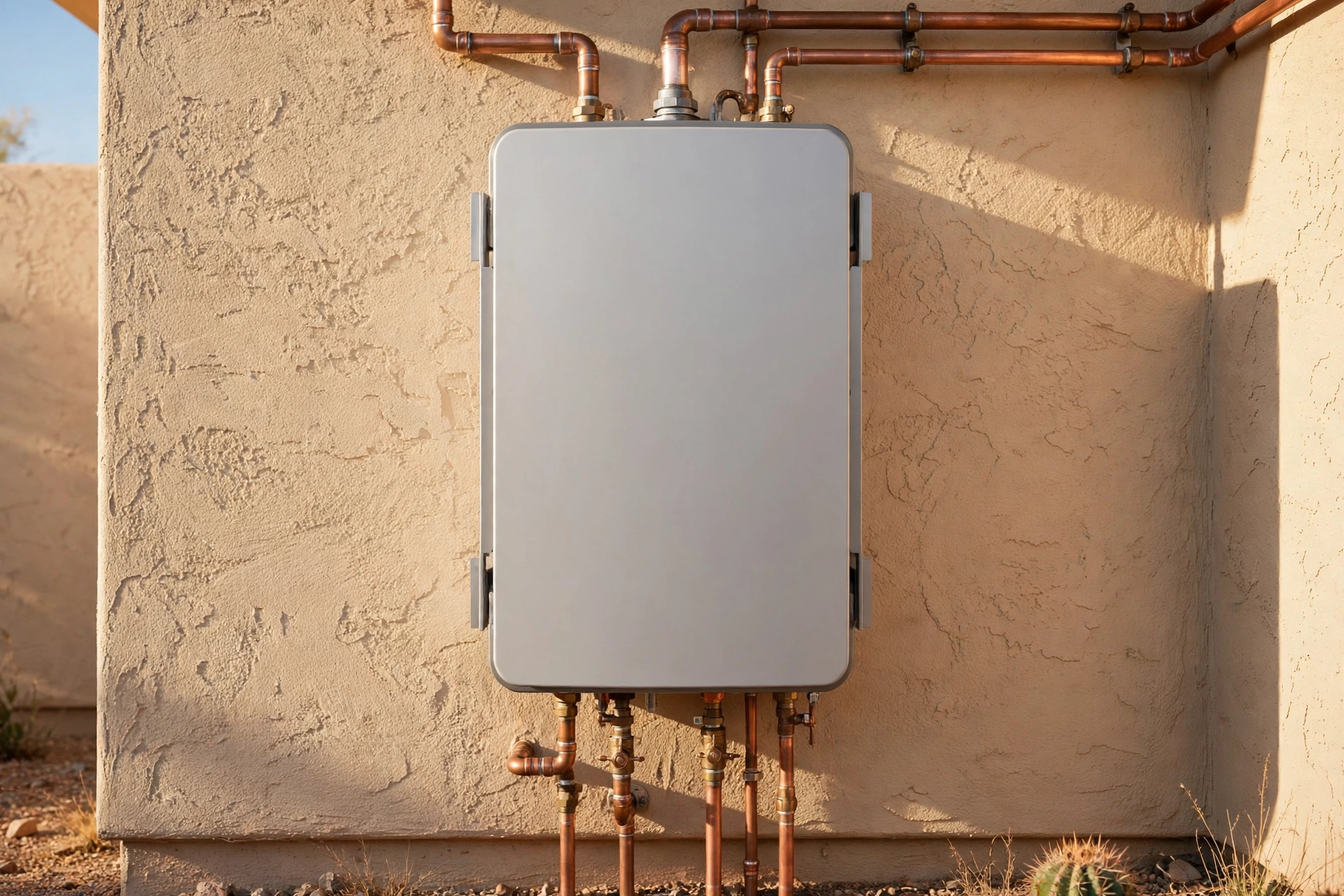
The tradeoff is precision. Tankless units need correct sizing for simultaneous fixtures, adequate gas supply or electrical capacity, and above all, protection from Tempe's mineral-heavy water. Scale buildup on a tankless heat exchanger chokes efficiency fast. We install, repair, and descale tankless systems across Tempe, and we set every unit up to survive our water.
The endless hot water is the headline, but the practical benefits run deeper. Tankless units last significantly longer than tank models when maintained, often reaching 20 years, and they free up meaningful garage floor space. For households with back-to-back morning showers or a soaking tub that drains a tank in one fill, the difference is immediate.
Energy use drops too, because there is no standby heat loss from a stored tank. In a Tempe garage that already sits at 115 degrees in summer, standby loss is modest, but the on-demand design still wins on efficiency. The key is honest sizing: a unit that cannot meet your peak simultaneous demand will leave you frustrated, so we size to your real fixtures, not to a brochure. There is also the space question. Tempe garages double as workshops, storage, and home gyms, and a 50-gallon tank eats a meaningful footprint. Wall-mounted tankless units free that floor space entirely. For townhomes and smaller lots where every square foot counts, that alone can justify the switch.
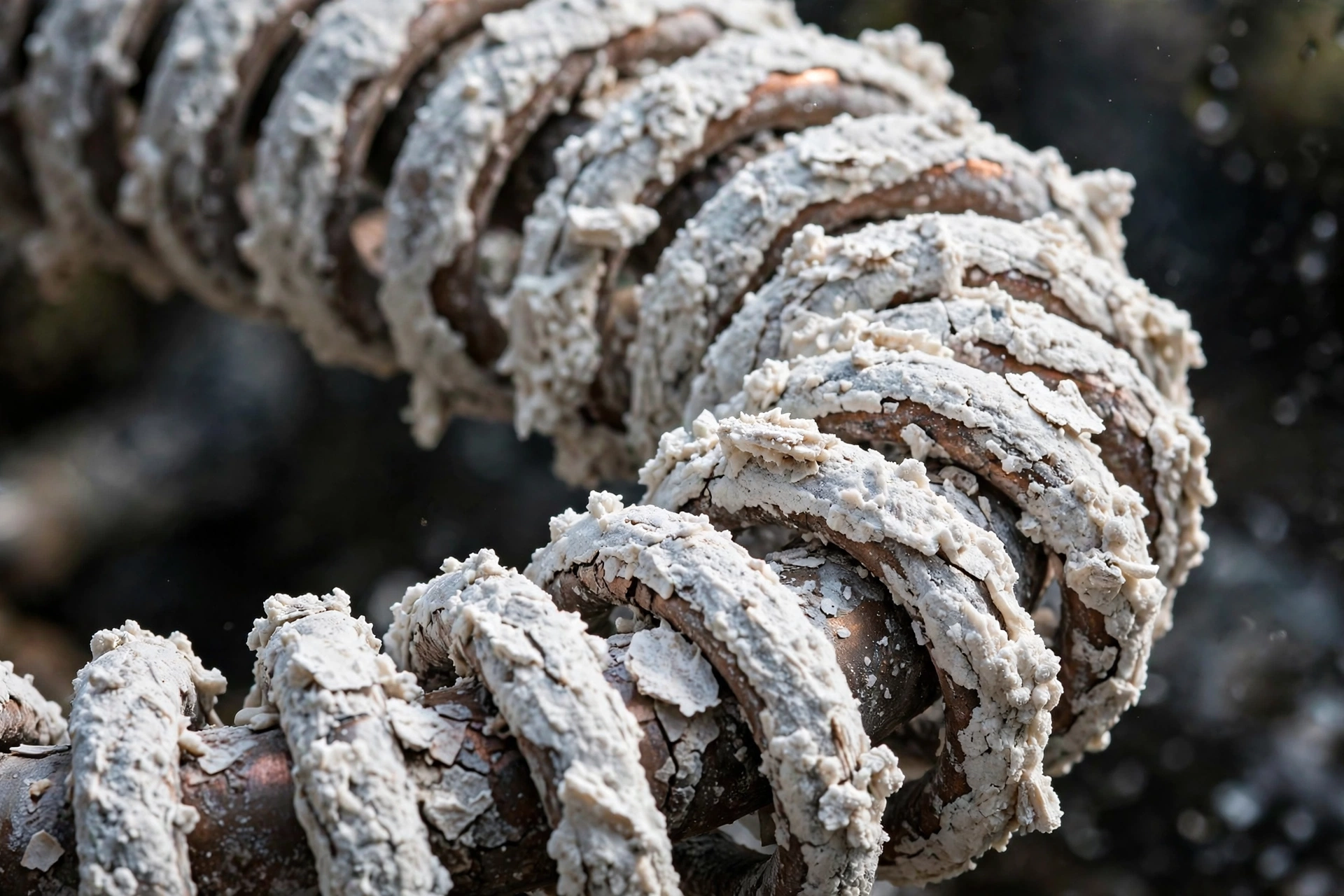
A tankless heat exchanger is a marvel of compact engineering: thin passages that transfer burner heat to flowing water in seconds. Those same thin passages are scale magnets in 15 to 25 grains per gallon water. Even a thin layer of mineral scale insulates the exchanger, forcing longer burn times, raising energy use, and eventually triggering error codes or overheating shutdowns.
Descaling flushes a mild acidic solution through the isolated heat exchanger, dissolving the scale without harming the unit. We recommend it yearly for Tempe homes, and every six months for households with very heavy use or known extreme hardness. It is a straightforward service visit, and it is the single biggest factor in how long your tankless unit lasts here.
Related: water heater maintenance plans, Tempe tankless service
Tankless units are good communicators. When something goes wrong, they usually display an error code pointing at ignition failures, overheating, flow sensor problems, or exhaust issues. We read those codes as a starting point, then verify with hands-on testing, because a code tells you the symptom, not always the cause.
Common Tempe repairs include descaling an overheating exchanger, cleaning flame sensors dulled by dust, replacing flow sensors, and addressing venting affected by monsoon-driven debris. Because tankless units have more electronics than tank models, we also check control boards and wiring connections that loosen under garage heat cycling. Most repairs are completed in one visit. We also see units that were never set up correctly in the first place: undersized for the household, starved by an undersized gas line, or installed without descaling valves. Some repairs are really corrections. When we find an installation problem behind a performance complaint, we explain the root cause and fix it properly instead of treating symptoms.
Tankless sizing is about flow rate, not gallons. We calculate your peak simultaneous demand: the shower running while the dishwasher fills, for example, and size the unit's gallons-per-minute output to cover it with margin. Undersizing is the most common regret we see, and it is entirely avoidable with honest math upfront.
Installation also means fuel. Gas tankless units often need a larger gas line than the tank unit they replace, plus dedicated venting rated for the higher exhaust temperatures. Electric whole-house tankless units need substantial panel capacity. We verify all of this before installation day, so the project finishes cleanly instead of stalling on a missing upgrade.
The one knock on tankless is the wait: water already sitting in your pipes has to clear before hot water arrives, which wastes water and patience. A recirculation pump solves this by keeping hot water moving through a dedicated loop or using the cold line as a return, so hot water reaches the tap in seconds.
For Tempe homes with long pipe runs from the garage to distant bathrooms, recirculation transforms the tankless experience. Modern pumps run on timers or demand buttons rather than continuously, so they do not waste energy. We install and service recirculation systems alongside tankless units, and we can add one to an existing tankless setup too. Water conservation matters in the desert, and recirculation earns its keep here. Without it, a distant master bathroom can waste gallons every morning while you wait for hot water. In a region where every gallon counts, cutting that waste is both an environmental win and a noticeable comfort upgrade.
Tankless maintenance in Tempe is not optional, it is the warranty and the lifespan. Yearly descaling, an inlet filter cleaning, and a venting check keep the unit at rated efficiency and catch small issues before they become error codes. We bundle these into a simple annual visit that takes about an hour.
Between visits, keep the area around the unit clear, watch for new error codes, and note any change in hot water delivery time or temperature stability. Tankless units reward attentive owners with two decades of service. Neglected in hard water, they punish inattention with mid-life heat exchanger failure, which is the most expensive part to replace. We also keep a service history for your unit. Tracking descaling dates, filter cleanings, and any error codes over the years lets us spot patterns, like hardness creeping up or a component aging out. That history turns each annual visit into a smarter one, and it protects any remaining warranty coverage.
Related: emergency repair, our Tempe service area
Describe what your unit is doing and we will help arrange the next step.
Yearly descaling is the right baseline for Tempe's 15 to 25 grains per gallon water. Homes with heavy hot water use or water testing at the high end of that range do better on a six-month cycle. Skipping descaling lets scale choke the heat exchanger, which raises energy use and can trigger overheating shutdowns.
Yes, when it is sized correctly. We calculate your peak simultaneous flow in gallons per minute and select a unit that covers it with margin. Problems arise only when a unit is undersized for the household, which is why we do the fixture math with you before recommending anything.
They do, though monsoon conditions deserve attention. Wind-driven dust can clog inlet filters and burner assemblies faster, and debris sometimes affects exterior vent terminations. We check venting and filters as part of routine service, and a quick visual check of the vent after major storms is good practice.
Most Tempe conversions need a larger gas line and new venting, which are the main project drivers beyond the unit itself. We do not quote prices sight unseen because the work depends on your home's layout and existing hookups. A site visit lets us map out exactly what your conversion requires.
With yearly descaling and routine service, 20 years is a realistic expectation, roughly double a tank unit's life in Tempe water. Without descaling, hard water scale can destroy a heat exchanger in far less time. Maintenance is the entire difference between those two outcomes.
If your bathrooms sit far from the water heater and you hate waiting for hot water, yes. Recirculation delivers hot water in seconds and saves the gallons that otherwise run down the drain while you wait. Timer and on-demand controls keep energy use minimal, and we can retrofit a pump to most existing tankless setups.
Not seeing your question? Request service and describe what your unit is doing.
Call (480) 806-1663Valley Water Heater Pros repairs gas and electric water heaters across Tempe, from failed heating elements to …
Learn more
A new water heater installation in Tempe starts with sizing the tank to your household and choosing between ga…
Learn more
Water heater replacement makes sense when your tank is past its prime, leaking from the tank body, or costing …
Learn more