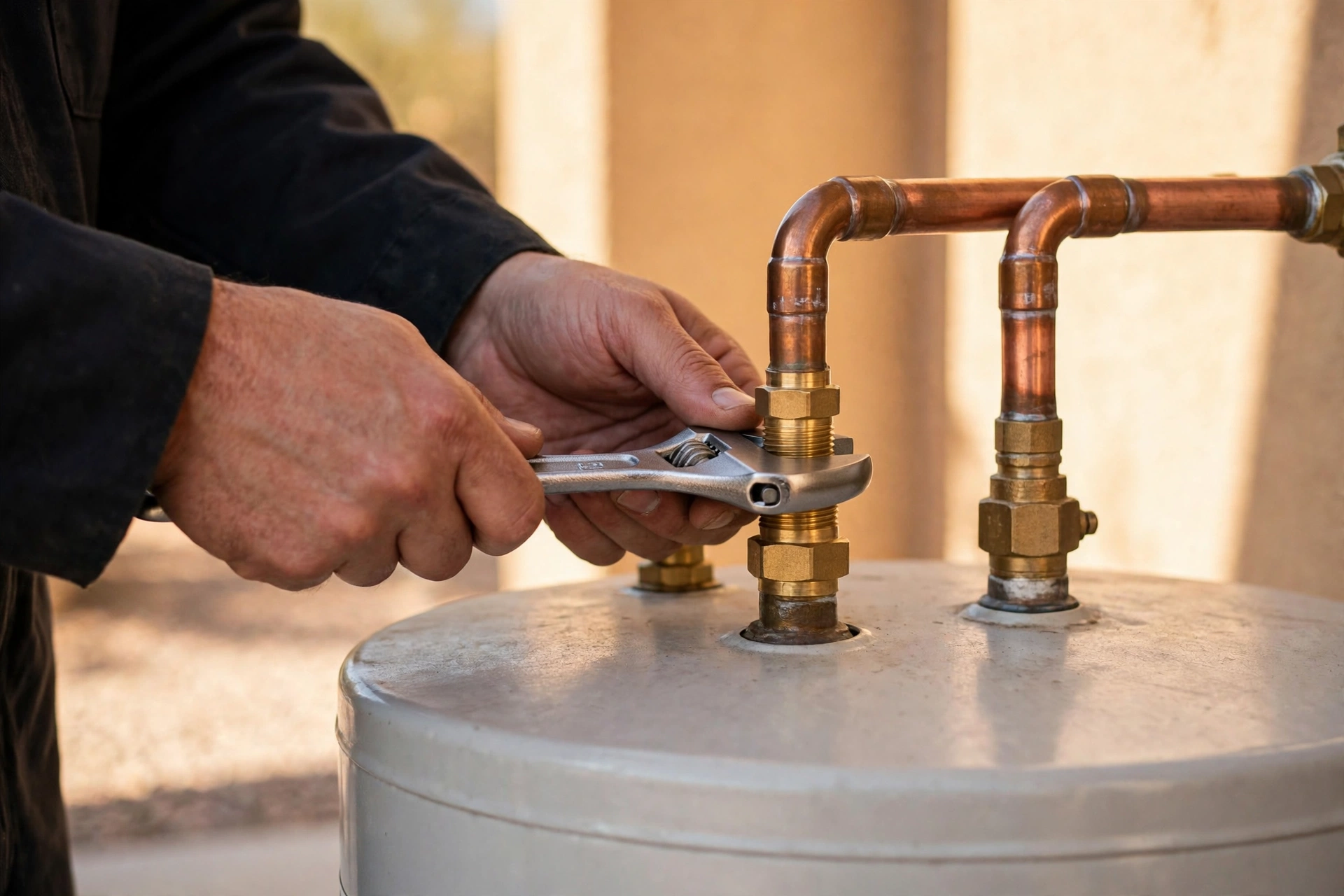
Water Heater Repair
Valley Water Heater Pros repairs gas and electric water heaters across Tempe, from failed heating elements to …
Learn moreNobody thinks about their water heater until it fails, which is exactly why maintenance matters. In Tempe, the enemy is not age alone, it is the steady accumulation of mineral sediment from some of the hardest municipal water in the country. Left alone, that sediment hardens, insulates the tank bottom, strains every component, and quietly shortens the unit's life by years.
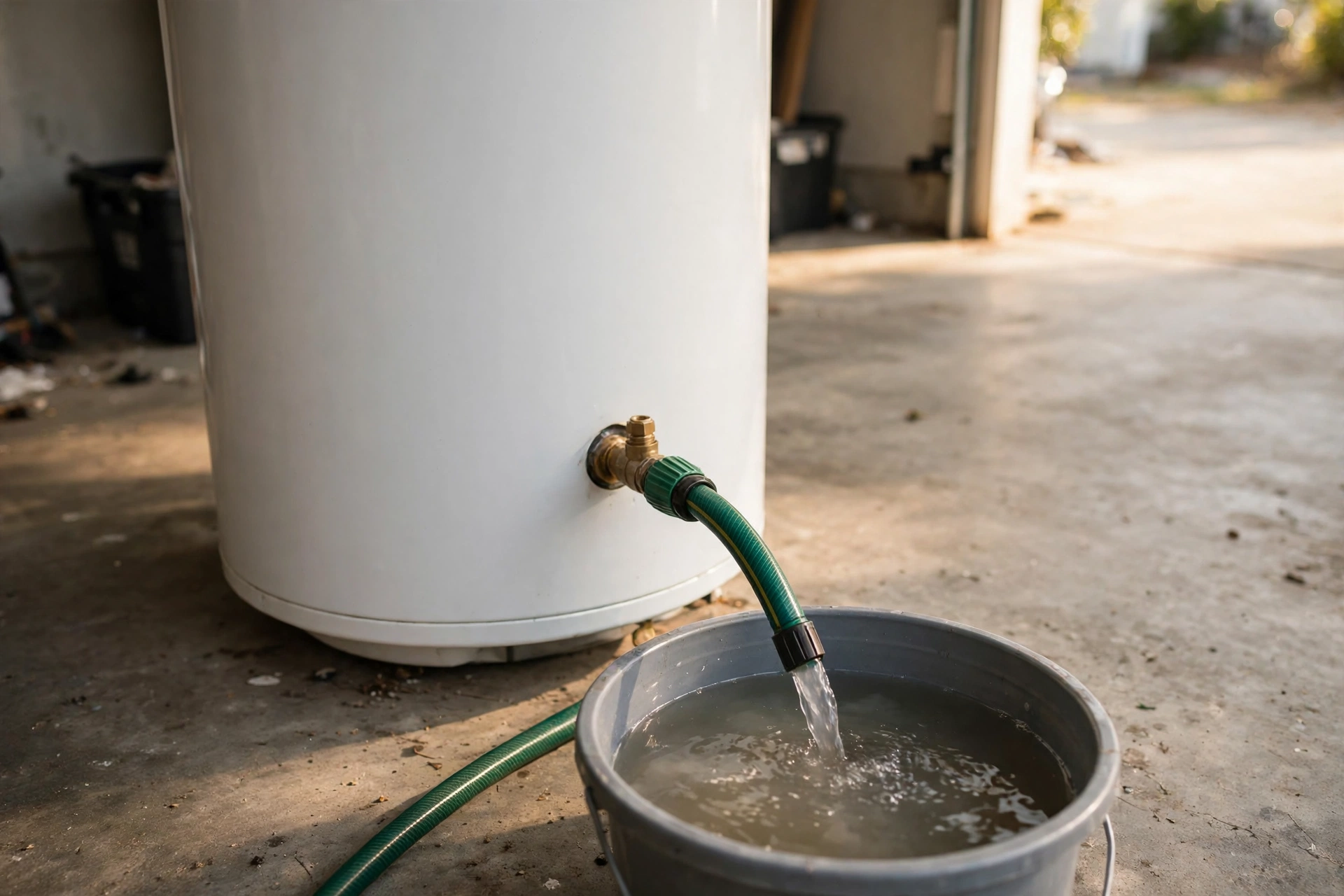
Professional maintenance reverses that process. A thorough flush clears sediment before it hardens, an anode rod inspection catches corrosion protection before it runs out, and TPR valve testing confirms your safety systems work. It is a single annual visit that costs far less than the repairs and early replacements it prevents.
Every gallon of Tempe water carries dissolved calcium and magnesium. Heat drives those minerals out of solution, and they settle to the tank bottom as sediment. At first it is a soft layer, but repeated heating bakes it into a hard, crusty mass that clings to the steel and the lower heating element.
That crust is an insulator. The burner or element must run longer and hotter to push heat through it, which overheats the tank bottom, warps steel, and burns out electric elements prematurely. You hear it as rumbling and popping. You feel it as hot water that runs out too soon. And you pay for it twice: once in energy waste, and again in the shortened life of the tank. Tempe's water does not give tanks a break seasonally, either. Unlike colder climates where inlet water temperatures swing wildly, our groundwater stays relatively warm year-round, which means the burner cycles steadily all year and sediment bakes continuously. There is no off-season for scale in the Valley, which is why the annual flush schedule matters here more than almost anywhere.
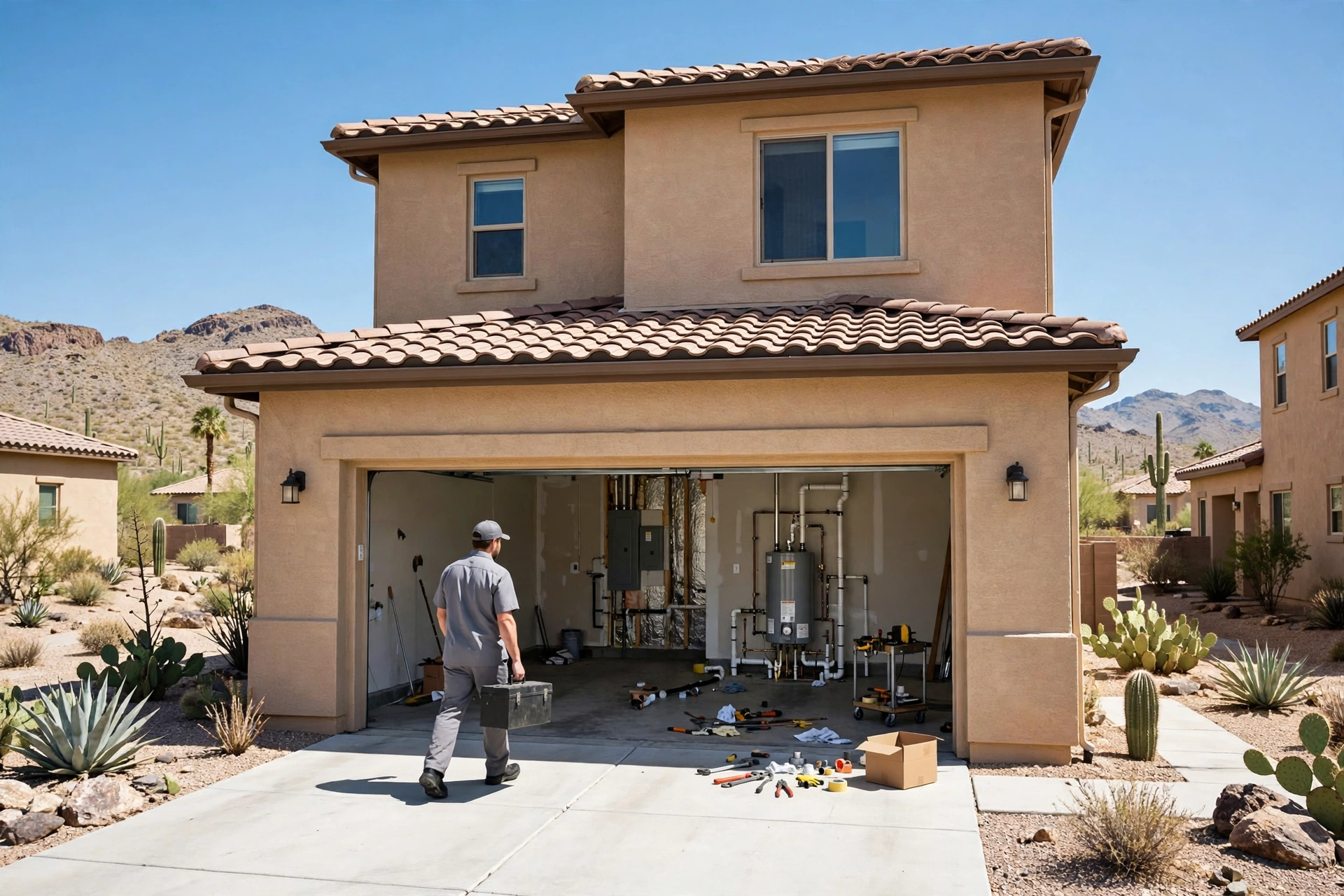
A proper flush is more than opening the drain valve for a minute. We start by shutting off the fuel source and letting the water cool to a safe temperature. Then we connect a hose to the drain valve, open it fully, and let the tank empty while we pulse the cold water inlet to stir up settled sediment and carry it out.
Stubborn buildup sometimes needs the drain valve removed and a flush wand worked through the opening to break up hardened chunks. We inspect what comes out, because the color and volume of sediment tell us a lot about the tank's condition and the anode rod's remaining life. Then we refill completely, restore power or gas, and verify the thermostat still holds 120 degrees.
Related: water heater repair, Tempe flush service
Inside every tank water heater, a magnesium or aluminum rod sacrifices itself to corrosion so the steel tank does not have to. It is a brilliant, simple piece of engineering, and in Tempe's aggressive water it gets consumed fast, sometimes in as little as two to three years.
During maintenance we pull the anode rod and check how much sacrificial metal remains. Replacing a depleted rod is inexpensive and straightforward, and it directly extends the tank's life by restoring corrosion protection to the lining. A tank with a fresh rod and regular flushes can outlive a neglected twin by many years. It is the highest-return part in the whole unit. There are different anode rod materials, and the choice matters in hard water. Magnesium rods protect aggressively but get consumed fastest; aluminum-zinc rods last longer and can help with odor issues some Tempe homeowners notice. We select the rod type based on your water conditions and the tank's history, not just whatever is on the truck.
The temperature and pressure relief valve is your water heater's last line of defense. If the thermostat fails and the tank overheats, or pressure builds beyond safe limits, the TPR valve opens and discharges water to prevent a rupture. It is a simple mechanical device, and like all mechanical devices, it can seize with age and mineral exposure.
Testing takes seconds: we lift the valve's lever briefly and confirm water flows freely through the discharge pipe, then snaps shut cleanly when released. If it dribbles, sticks, or will not reseat, we replace it on the spot. This is not a part to defer. A failed TPR valve turns a thermostat malfunction from an inconvenience into a genuine hazard, so we test it at every maintenance visit.
Related: emergency water heater services
For most Tempe households, a full maintenance visit once a year hits the sweet spot. That cadence keeps sediment from hardening between flushes and catches anode rod depletion before the tank lining is exposed. Homes with high hot water demand, water softeners that have lapsed, or hardness testing at the top of the 15 to 25 grains range may benefit from a heavier schedule.
Tankless units follow their own rhythm, with descaling as the centerpiece rather than tank flushing, and we handle those on the same annual visit when a home has both. Whatever your setup, we put you on a reminder schedule so maintenance happens automatically instead of whenever someone remembers the garage exists. New homeowners in Tempe often inherit a mystery: a water heater of unknown age and unknown service history. In those cases we recommend starting with a full maintenance visit that establishes a baseline. We document the tank's condition, the anode rod's state, and the sediment load, so every future visit builds on known facts instead of guesses.
A one-time flush is perfect when you have just moved in, inherited an unknown maintenance history, or want to quiet a rumbling tank before deciding on bigger work. It clears what can be cleared and gives us a clear look at the tank's condition, which informs every decision after.
Ongoing care is for homeowners who want the full benefit: scheduled annual visits, anode rod tracking across years, and priority scheduling when something does go wrong. The per-visit math favors the plan, but the real value is never having to think about it. Your water heater simply gets serviced, year after year, and lasts like it should. Either way, you get a written summary after every visit: what we found, what we did, and what to watch. That record is useful for warranty questions, for future technicians, and for your own peace of mind. Good maintenance is a paper trail as much as it is a wrench.
Related: tankless descaling services, serving Tempe, Arizona
Describe what your unit is doing and we will help arrange the next step.
Once a year is the right cadence for most Tempe homes, given our 15 to 25 grains per gallon hardness. Households with very heavy hot water use or hardness at the top of that range sometimes need it more often. Annual flushing keeps sediment soft enough to flush out instead of baking into a permanent crust.
The anode rod is a magnesium or aluminum rod inside your tank that corrodes in place of the steel tank wall. In Tempe's aggressive water it can be consumed in two to three years. We check it during maintenance and replace it when depleted, which directly extends the tank's life.
Often, yes, especially if the sediment has not fully hardened. Flushing removes the loose and soft buildup that causes most rumbling and popping. If the tank has gone many years without service, some hardened scale may remain, and we will give you an honest assessment of what the flush accomplished.
You can, by briefly lifting the lever and letting it snap back, but there are caveats. Old valves sometimes fail to reseat and start leaking, which turns a test into a repair. During professional maintenance we test it with a replacement on hand, so there is no risk of leaving you with a dripping valve.
Yes, measurably. Sediment removal reduces overheating and component strain, fresh anode rods protect the tank lining, and regular inspections catch small failures early. In Tempe's hard water, maintained tanks routinely outlast neglected ones by years, making the annual visit one of the best values in home maintenance.
Absolutely. Tankless maintenance centers on descaling the heat exchanger rather than flushing a tank, plus inlet filter cleaning and venting checks. We service tankless units on the same annual rhythm, and homes with both tank and tankless equipment get everything handled in one visit.
Not seeing your question? Request service and describe what your unit is doing.
Call (480) 806-1663Valley Water Heater Pros repairs gas and electric water heaters across Tempe, from failed heating elements to …
Learn more
A new water heater installation in Tempe starts with sizing the tank to your household and choosing between ga…
Learn more
Water heater replacement makes sense when your tank is past its prime, leaking from the tank body, or costing …
Learn more