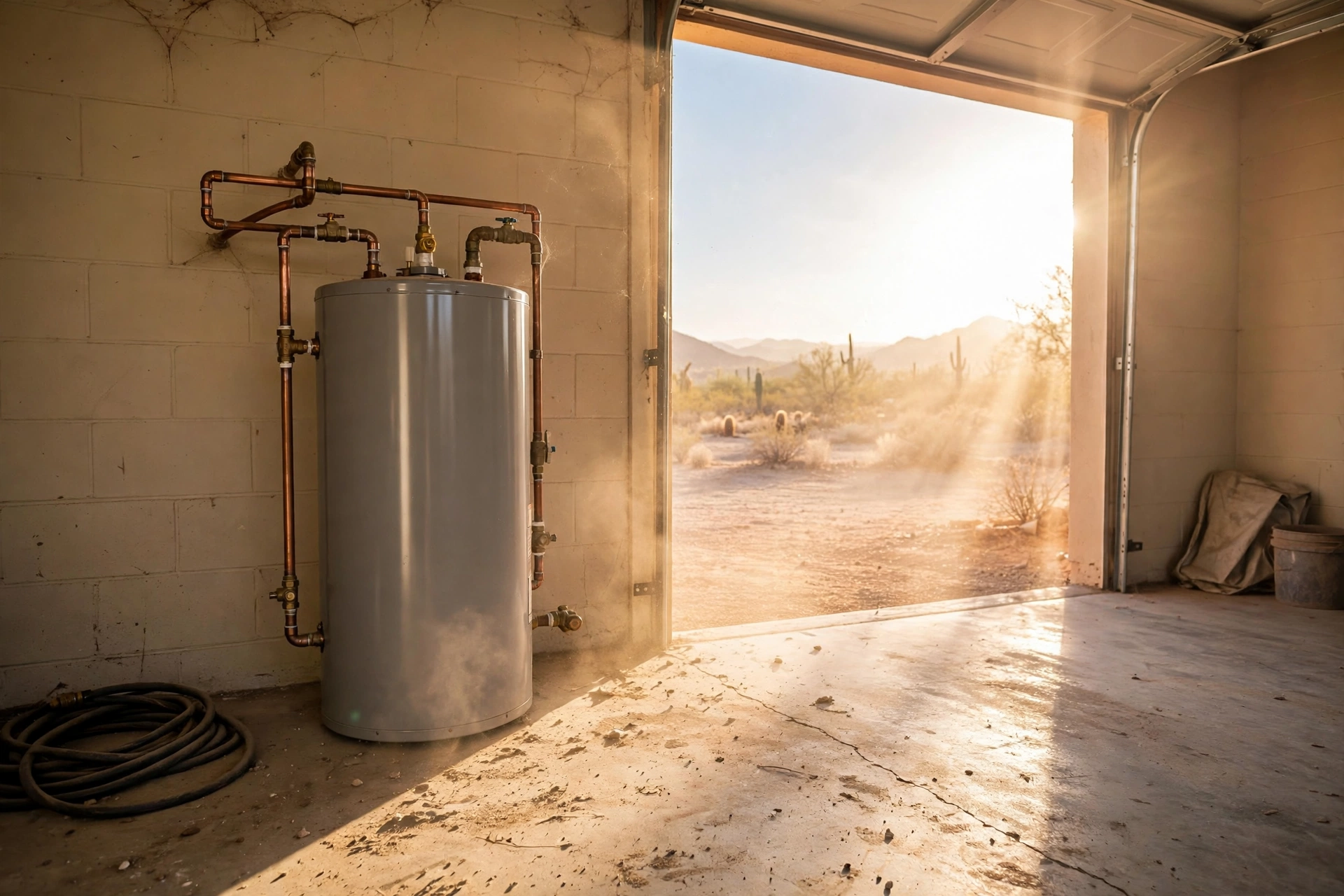
Garage Water Heater Installs in Arizona Heat
Garage installation is the norm in Tempe, and Arizona's 115 degree summer heat shapes every part of the setup.…
Learn moreYou hold the button, the pilot catches, you release slowly, and it dies. Again. A stubborn pilot light is one of the most common gas water heater complaints in Tempe, and the causes range from a ten minute fix to a sign the unit is aging out.
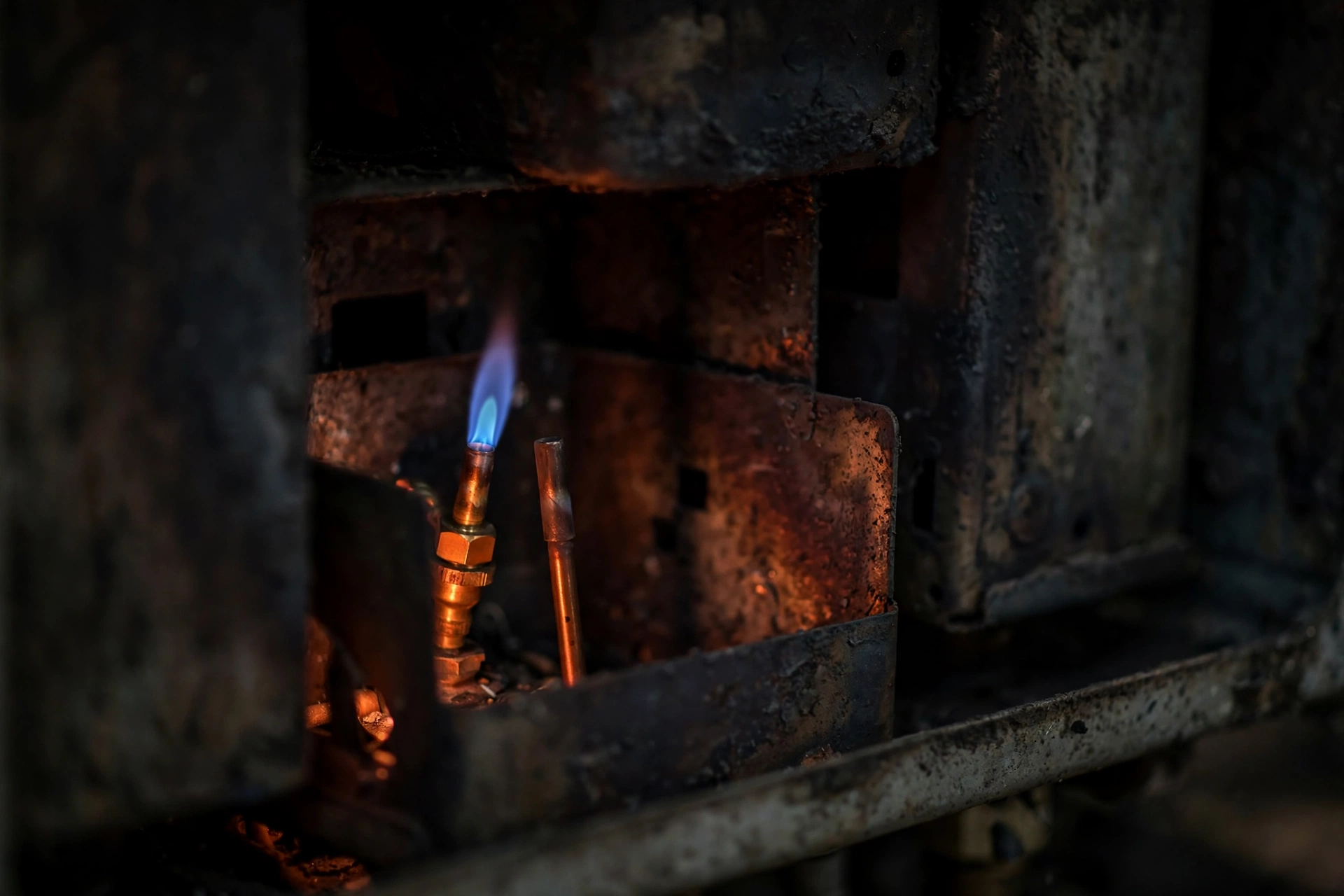
This guide walks through the likely culprits in order, with notes on which ones are safe DIY checks and which ones mean stepping back and calling a professional. Gas appliances deserve caution, so when something feels off, trust that instinct.
The pilot is a small flame that stays lit so it can ignite the main burner whenever the thermostat calls for heat. The thermocouple sits in that flame and generates a tiny electric current that holds the gas valve open. No flame means no current, which means the valve snaps shut. That is a safety feature, not a flaw.
When you light the pilot, you hold the button to manually override the valve until the thermocouple heats up and takes over. If the pilot dies the moment you release, the thermocouple is not doing its job. Understanding this little partnership makes every other diagnosis step make sense.
Most gas water heaters in Tempe have the lighting instructions printed on a label right on the unit. Read them before you start, since the exact knob sequence varies by model. The universal rule is patience: hold the pilot button a full minute after the flame catches so the thermocouple gets thoroughly hot before you release.
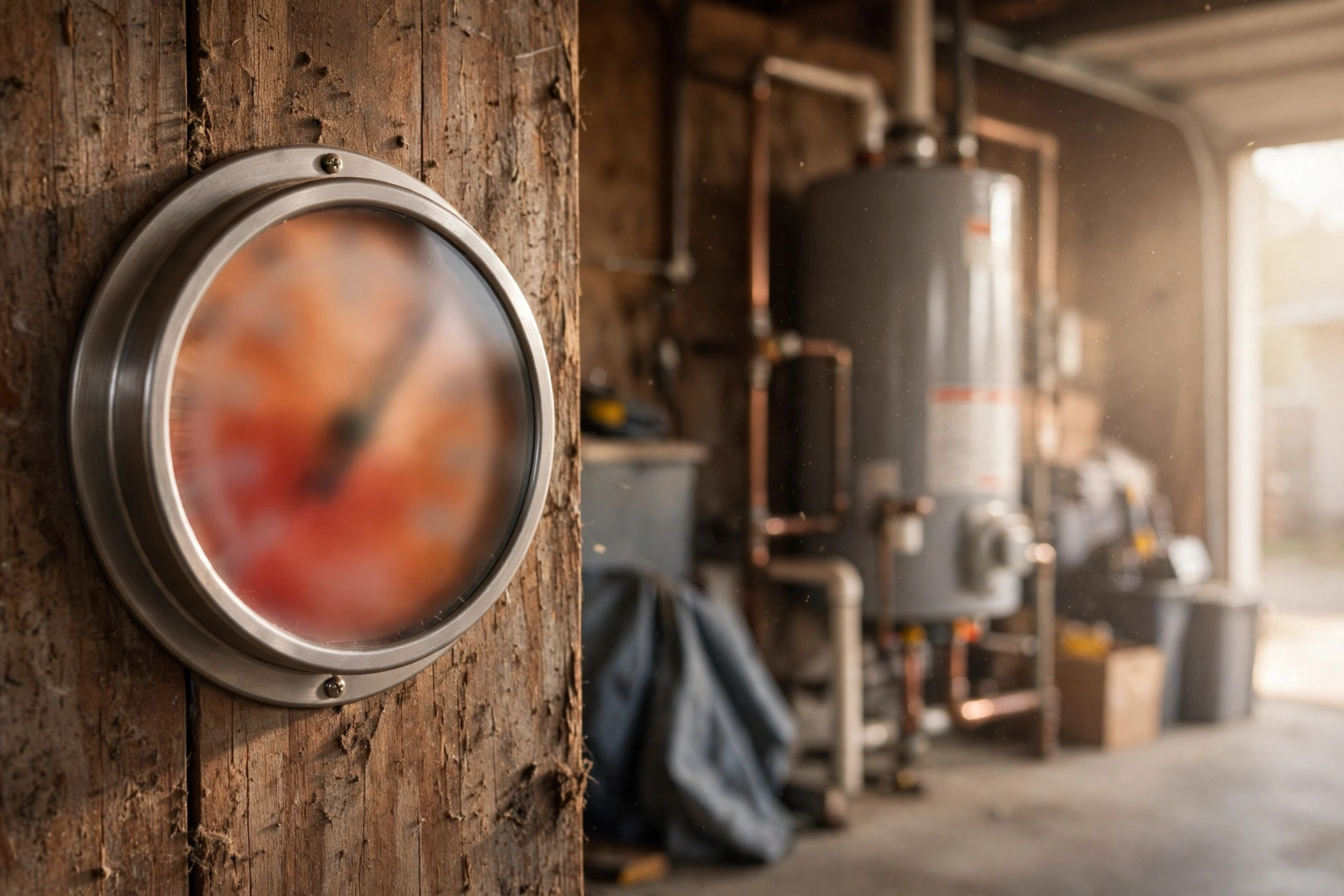
Thermocouples wear out. After years in a hot flame, the sensor weakens and stops generating enough current to hold the valve open, even though the pilot flame looks perfectly fine. This is the most common reason a pilot lights but will not stay lit, and it is a routine, inexpensive repair.
A weak thermocouple sometimes shows early symptoms before it fails completely. The pilot may stay lit for hours and then die overnight, or it may need several attempts before it catches and holds. If your pilot's behavior has been getting flakier over weeks, the thermocouple is almost certainly the story. A dead pilot means no hot water, and our guide to no hot water causes and fixes in Tempe covers the other suspects when the pilot checks out fine.
Tempe water heaters usually live in garages, and garages are drafty. A strong gust, especially during monsoon season when winds whip through open garage doors, can blow a pilot out. If your pilot problems started during a windy stretch, a draft may be the whole story.
Check whether the draft is normal garage airflow or something new, like a vent cap that blew off or a garage door that no longer seals. Persistent drafts can also signal a venting problem, which matters because proper venting carries combustion gases safely outside. When in doubt about venting, bring in a professional rather than experimenting.
Dust, spider webs, and corrosion can partially block the pilot orifice, producing a weak, wavering flame that cannot heat the thermocouple properly. Garages collect dust, and Arizona dust storms add to it, so a dirty pilot assembly is more common here than in cleaner indoor installations.
A weak yellow flame instead of a strong blue one points to a dirty orifice or low gas pressure. Cleaning a pilot assembly involves disassembly around gas components, which is why many homeowners prefer to let a technician handle it. It is a quick service visit, and the tech can inspect the burner and thermocouple at the same time. If you also notice a water heater leaking at the base, treat the leak as the more urgent problem, and a visit for gas water heater services covers the pilot, thermocouple, and burner in one trip.
If the pilot will not light at all, not even briefly, check the gas supply before assuming the worst. Make sure the gas valve to the water heater is fully open and that other gas appliances in the home are working. If nothing gas works, the issue is with the supply, not the water heater.
Never try to force gas flow or bypass safety controls. If you smell gas at any point, leave the area and call for help from outside the home. Gas supply issues beyond a closed valve are strictly professional territory.
If you recently had other gas work done, like a new stove or dryer installation, a valve may have been left partially closed. Trace the gas line from the meter to the water heater and confirm every valve handle runs parallel to the pipe, which means fully open.
A single thermocouple replacement on a mid life unit is a no brainer. But repeated pilot problems on a water heater that is 8 to 10 years old tell a different story. Aging gas controls, corroded burners, and worn valves tend to fail in sequence, and each service visit buys less time than the last.
If your unit is in that age range and the pilot is just the latest complaint, read up on flushing a water heater in Tempe hard water and the other maintenance your tank may have missed. Sometimes the honest math favors putting repair money toward a replacement instead of nursing an old unit through another summer.
Read the guide, then describe your water heater problem and we will help arrange the next step.
The most common cause is a worn thermocouple that can no longer hold the gas valve open. Drafts through a drafty garage and a dirty pilot assembly are the next most likely culprits.
Yes, following the lighting instructions on the unit is safe for most homeowners. If the pilot will not stay lit after a few careful attempts, or if you smell gas, stop and call a professional.
We do not publish pricing because every situation differs, but a thermocouple is one of the least expensive water heater repairs. The bigger question on older units is whether repair money is better spent toward replacement.
Why pilots die and what actually fixes them.
Call (480) 806-1663Garage installation is the norm in Tempe, and Arizona's 115 degree summer heat shapes every part of the setup.…
Learn more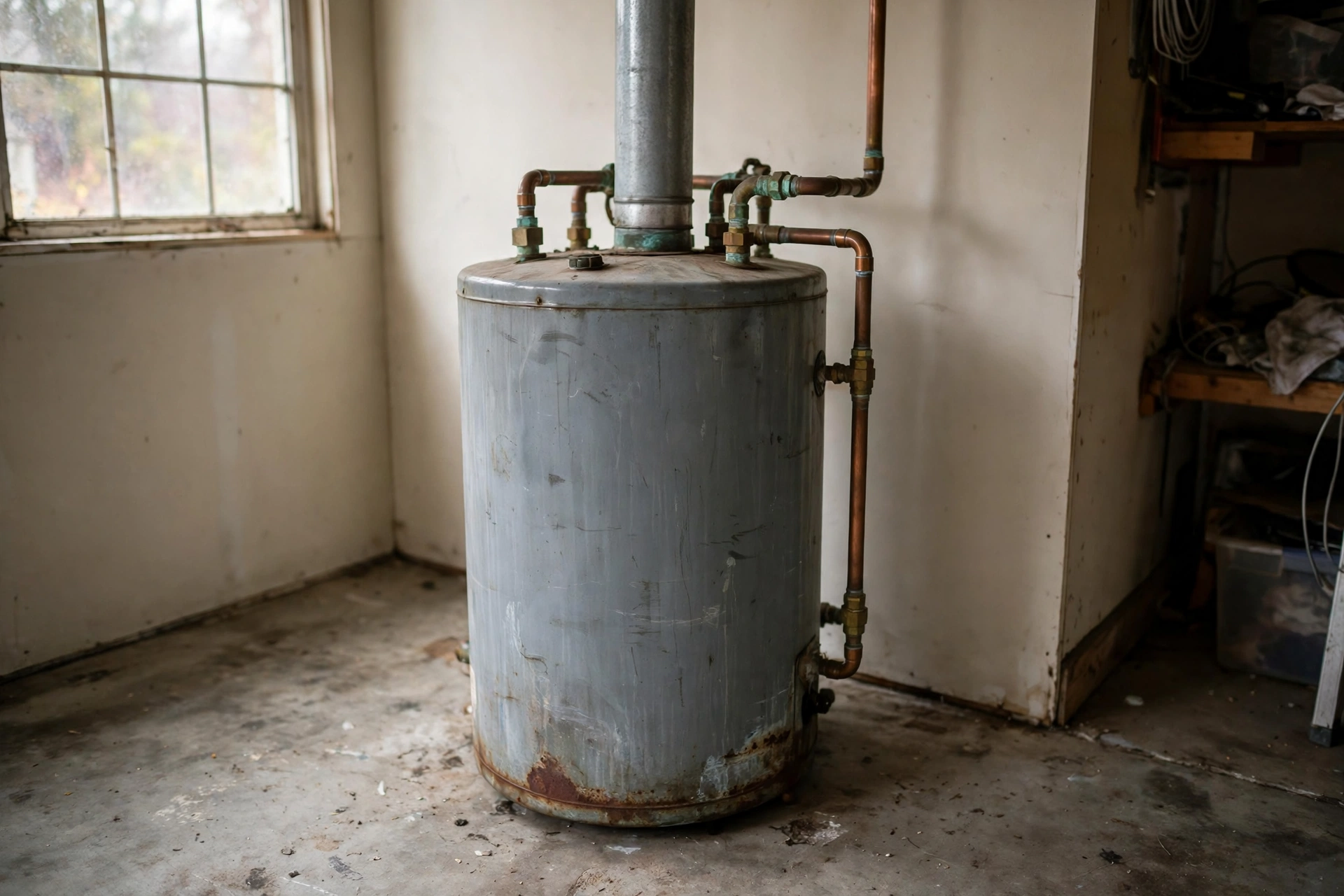
A traditional tank water heater in Arizona usually lasts 6 to 10 years, while a tankless unit can reach 15 to …
Learn more
A leaking water heater in Tempe needs fast action because most units sit in garages where water spreads quickl…
Learn more