No Hot Water? Causes and Fixes in Tempe
Losing hot water in Tempe usually traces back to a handful of causes: a pilot light that went out, a failed th…
Learn moreEvery water heater replacement in Tempe eventually comes down to the same question: stick with a tank or go tankless. The answer is not the same here as it is in soft water states, because Arizona's extremely hard water and scorching garage heat change the math on both options.
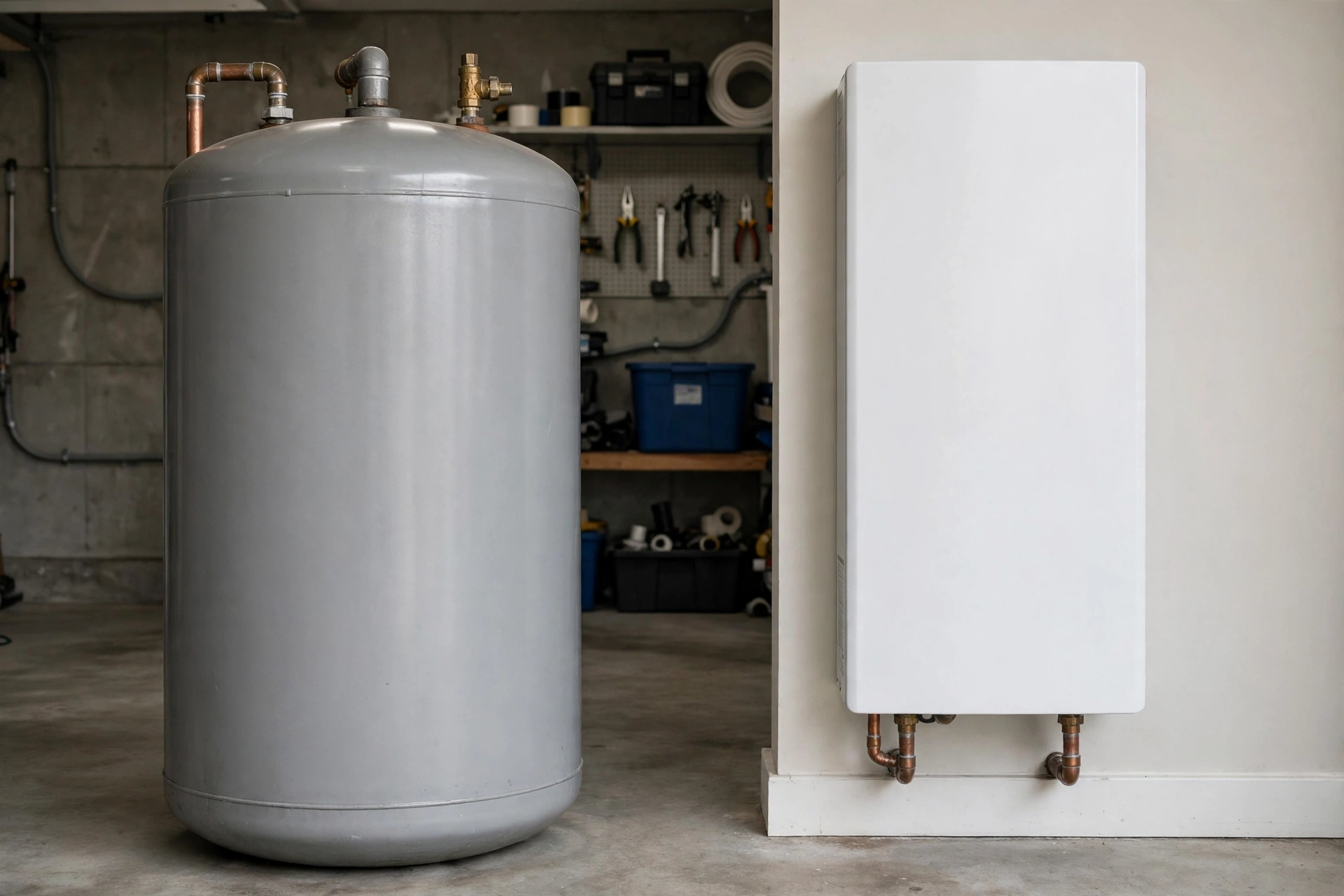
This guide compares the two systems the way a local homeowner actually experiences them: lifespan in Tempe water, how they handle sediment and scale, what installation looks like in a typical Valley garage, and which choice makes sense for different households.
A tank water heater in Tempe realistically lasts 6 to 10 years. The constant 15 to 25 grains per gallon mineral load builds sediment that overheats the tank bottom, and the anode rod depletes faster than it would in softer water. Tanks that get annual flushing land near the top of that range; neglected ones do not.
Tankless units last 15 to 20 years because there is no tank to corrode and no standing water to collect sediment. The catch is scale on the heat exchanger, which needs annual descaling. Our full breakdown of how long water heaters last in Arizona covers both systems in detail, and it is a good companion read if lifespan is your top concern.
Tanks and hard water are natural enemies. Sediment settles on the tank floor, insulates the burner, causes rumbling and popping, and eventually cracks the glass lining. Flushing once a year keeps the damage in check, but the fight never really ends while the tank holds 40 or 50 gallons of mineral heavy water around the clock.
Tankless units dodge the sediment problem but face a scale problem instead. When very hard water flashes through a hot heat exchanger, minerals plate onto the metal and choke efficiency. Annual descaling dissolves that coating. The maintenance is different, not optional, and skipping it is the number one reason tankless units underperform in the Valley. A water softener changes the equation for both systems by reducing the mineral load before it ever reaches the heater. Many Tempe homeowners pair a softener with either system, which eases sediment in tanks and scale in tankless units alike.
Tank units win on day one. They are simpler to install, the venting and gas or electrical requirements are usually already in place, and the equipment itself costs less. For a homeowner who needs hot water restored quickly or plans to move in a few years, a tank is the practical choice.
Tankless wins over the long haul. One tankless unit can outlast two tank replacements, it only heats water when you call for it, and it frees up garage floor space. The value case is strongest for homeowners who plan to stay put and will actually schedule the annual descaling that protects the investment. Do not forget maintenance in the value math either. A tank needs an annual flush and periodic anode rod checks, while a tankless needs yearly descaling, so budget a small recurring maintenance habit for whichever system you choose.
Most Tempe water heaters live in the garage, and summer heat past 115 degrees shapes both options. Tanks actually get a small efficiency boost from warm ambient air and warm inlet water, since the burner has less work to do. But heat also accelerates tank corrosion and wears rubber components faster.
Tankless units mount on the wall, which frees floor space in a crowded garage. They still need proper venting and freeze protection is a non issue here, but the unit must be sized for Arizona's groundwater temperatures and household demand. A professional water heater installation accounts for venting, gas supply, and sizing from day one. Venting deserves extra attention since monsoon winds can stress vent caps and affect draft, as our monsoon season water heater tips for Tempe explain.
Related: monsoon season water heater tips for Tempe, water heater installation
Choose a tank if your budget is tight, your current setup already fits a tank, or your household hot water demand is modest and predictable. Tanks are also the faster, simpler swap when the old unit fails and you need hot water back today.
Choose tankless if you want endless hot water for back to back showers, you plan to stay in the home long enough to enjoy the 15 to 20 year lifespan, and you will commit to annual descaling. Large families near ASU with teenagers showering in shifts are classic tankless candidates, as are homeowners reclaiming garage space for a workshop. Households with predictable routines and modest hot water use rarely notice the difference between the two systems day to day. The choice usually comes down to budget today versus value over the next decade or two.
The right choice depends on your budget, your timeline in the home, and your willingness to maintain the unit. There is no universal winner, only the winner for your situation. If your current tank is aging out, reading the signs it is time to replace your water heater can confirm whether you are deciding under pressure or planning ahead.
Either way, sizing and installation quality matter more than the brand on the box. A properly sized and correctly vented unit of either type will outperform a poorly installed premium model every time, so choose your installer with the same care you choose the equipment.
Read the guide, then describe your water heater problem and we will help arrange the next step.
It can be, if you commit to annual descaling. Tankless units last 15 to 20 years in Arizona, but Tempe's 15 to 25 grains per gallon water will scale the heat exchanger fast without yearly maintenance.
Typically 6 to 10 years. Annual flushing and anode rod checks push units toward the top of that range, while neglected tanks in hard water fail sooner.
A tank replacement is usually simpler and less expensive upfront since venting and connections are already in place. Tankless installs may need venting or gas line upgrades, which adds to the project.
Straight answers to the tank versus tankless questions Tempe homeowners ask.
Call (480) 806-1663Losing hot water in Tempe usually traces back to a handful of causes: a pilot light that went out, a failed th…
Learn more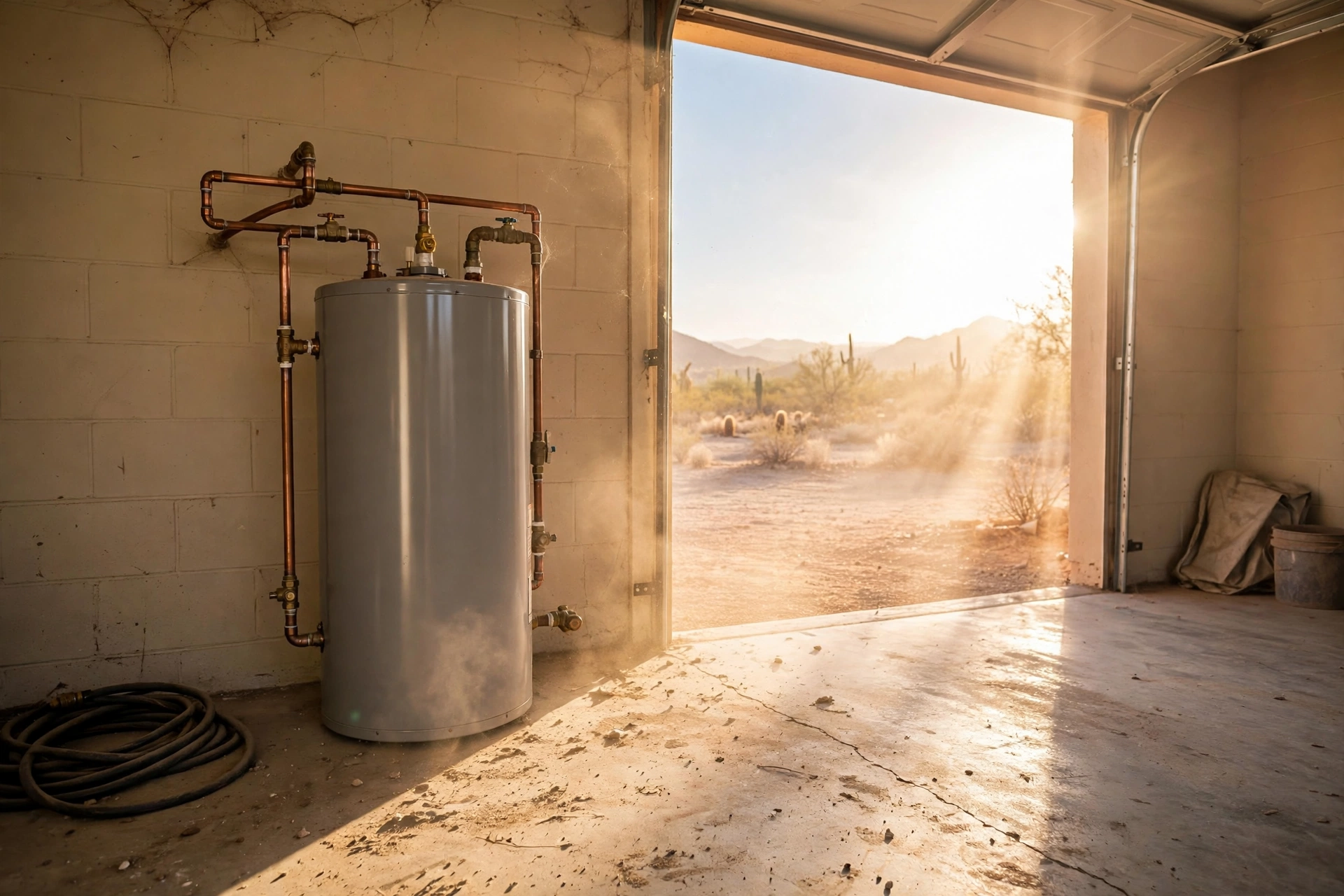
Garage installation is the norm in Tempe, and Arizona's 115 degree summer heat shapes every part of the setup.…
Learn more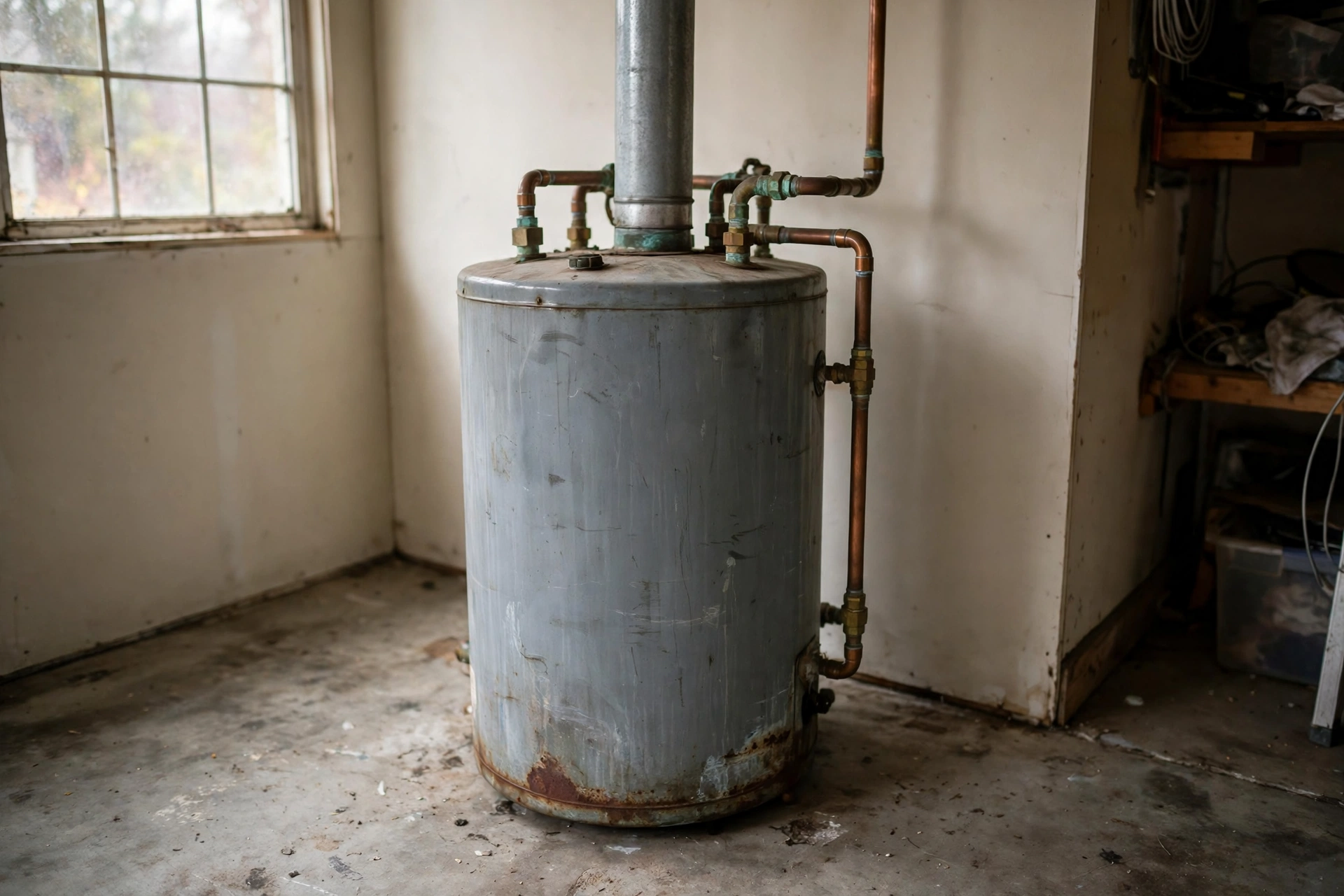
A traditional tank water heater in Arizona usually lasts 6 to 10 years, while a tankless unit can reach 15 to …
Learn more